
The story of the name, from the sources
In Lisan al-Arab, a "laylaa" night is a long, hard night; some say it is the darkest night of the month, "and from it the woman was named Layla".
“the darkest night of the month, and from it the woman was named Layla”
a “laylaa” night: long and hard
Lisan al-Arab · vol. 11, pp. 607–610
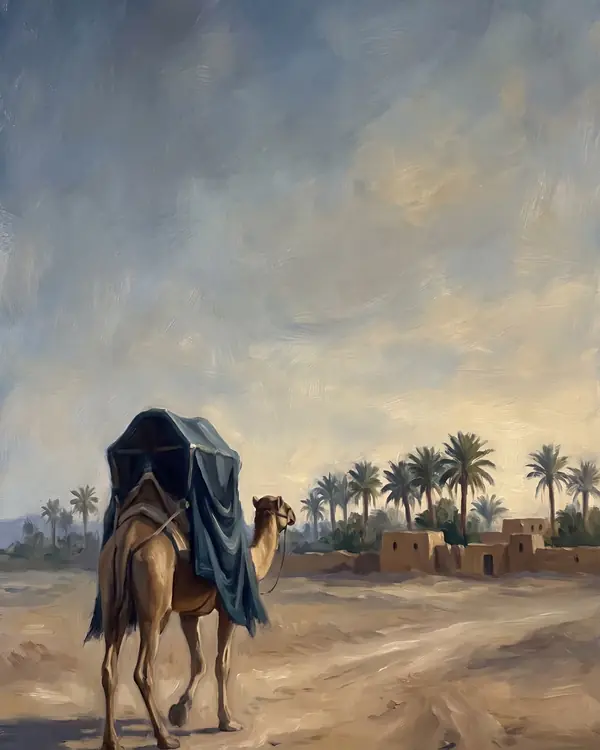
In the first years of Islam, Layla bint Abi Hathma emigrated twice to Abyssinia with her husband, Amir ibn Rabia, and then to Medina. Her husband said: no woman in a camel litter reached Medina before Layla. She was the first woman emigrant to arrive there.
ليلى بنتُ أبي حَثْمة
Layla bint Abi Hathma: twice to Abyssinia, then to Medina
“No woman in a camel litter reached Medina before Layla”
her husband, ‘Amir ibn Rabi‘a
Ibn Sa’d, al-Tabaqat · vol. 3, p. 296 · vol. 8, p. 210 · vol. 1, p. 175

In al-Isaba, Ibn Hajar's great book of biographies, there are nearly thirty entries for women named Layla.
nearly 30
entries for women named Layla
in Ibn Hajar’s al-Isaba
Ibn Hajar, al-Isaba · vol. 8, pp. 302–310

Then Layla became the name of every beloved. Qays ibn al-Mulawwah, the Majnun of Layla, said: I remembered Layla, and the years gone by. But al-Asmai doubted he ever lived: two men were never known in this world except by name, the Majnun of Banu Amir, and Ibn al-Qirriyya. And al-Jahiz said: every poem about Layla whose author was unknown, people gave to the Majnun.
«تذكّرتُ ليلى والسنينَ الخواليا»
Qays, the Majnun of Layla: “I remembered Layla, and the years gone by”
al-Asma‘i: “never known in this world except by name”
al-Jahiz: every unsigned poem about Layla went to the Majnun
al-Aghani · vol. 2, pp. 4, 10, 32

But Layla al-Akhyaliyya was a real poet. The poet al-Nabigha traded satires with her, and she won. Poets brought her their poems, and she judged between them.
ليلى الأخيليّة
Layla al-Akhyaliyya: al-Nabigha traded satires with her, and lost
“They brought their poems to Layla al-Akhyaliyya, and she judged for Aws ibn Ghalfa’”
al-Aghani · vol. 5, p. 15 · vol. 8, p. 271