Find your name
Muslim Baby Boy Names with Meanings
50 boys’ names, each with its meaning from a named source, mostly the classical Arabic dictionaries. Open a name for the book, volume and page.
- عَبَّاسAbbasع · ب · سAbbas is the lion that other lions flee from. Lisan al-Arab says: “al-ʿabbas is the lion that lions flee from, and after it a man is named Abbas.”Boy's name
- عَبْدُ اللهAbdullahع · ب · دAbdullah is ʿabd Allah: the one who worships God. Lisan al-Arab says: “ʿabada, yaʿbudu, ʿibada is said only of one who worships God.”Boy's nameQuran 72:19
 آدَمAdamأ · د · مAdam comes from udma, a tawny earthen brown: Ibn Faris says he was named so because he was taken from the face of the earth.Boy's nameQuran 2:31
- عَدْنَانAdnanع · د · نAdnan comes from ʿadn, staying in a place. Lisan al-Arab says: “the name Adnan is derived from al-ʿadn: when camels keep to a place, grow used to it and do not leave it.”Boy's name
 أَحْمَدAhmadح · م · دAhmad comes from hamd, praise, which Lisan al-Arab defines as the opposite of blame.Boy's nameQuran 61:6
- عَلِيّAliع · ل · وAli means the high, the elevated. Al-Jawhari writes in al-Sihah: “al-ʿali is the high, the elevated.”Boy's name
- أَمِيرAmeerأ · م · رAmeer (Amir) is the one who holds command. Al-Jawhari writes in al-Sihah: “al-amir is the one who holds command.”Boy's name
- أَنَسAnasأ · ن · سAnas comes from uns, ease in company: the opposite of loneliness. Lisan al-Arab says: “al-uns is the opposite of loneliness.”Boy's name
- عَاصِمAsimع · ص · مAsim is the one who holds back harm: the protector. Al-Jawhari writes in al-Sihah: “al-ʿisma is holding back, protecting.”Boy's nameQuran 11:43
- أَيْمَنAymanي · م · نAyman comes from yumn, blessing. Ibn Faris writes in Maqayis al-Lugha: “al-yumn is blessing; one says: he is maymun, blessed.”Boy's name
- بِلَالBilalب · ل · لBilal means water. Lisan al-Arab says: “al-bilal is water.”Boy's name
- فَهْدFahdف · ه · دFahd is the cheetah. Ibn Faris writes in Maqayis al-Lugha: “al-fahd (the cheetah) is well known, and its plural is fuhud.”Boy's name
- فَارِسFarisف · ر · سFaris is the horseman. Lisan al-Arab says: “al-faris is the one who has the horse.”Boy's name
- غَيْثGhaithغ · ي · ثGhaith means rain. Al-Jawhari writes in al-Sihah: “al-ghayth is rain.”Boy's name
- حَيْدَرHaiderح · د · رHaider comes from haydara, the lion. Al-Jawhari writes in al-Sihah: “al-haydara is the lion.”Boy's name
- هَيْثَمHaithamه · ث · مHaitham is the eagle's chick. Al-Jawhari writes in al-Sihah: “al-haytham is the eagle's chick, and from it a man is named Haytham.”Boy's name
 حَمْزَةHamzaح · م · زIn Lisan al-Arab, hamza is a sharp-tasting herb, and men were named after it; al-Qamus adds: the lion.Boy's name
- حَارِثHarisح · ر · ثHaris (Harith) is the one who earns. Lisan al-Arab says: “al-harith is the one who earns; ihtaratha al-mal: he earned the wealth.”Boy's name
- حَسَنHasanح · س · نHasan comes from husn, beauty and goodness. Ibn Faris writes in Maqayis al-Lugha: “al-husn is the opposite of ugliness; one says: a man who is hasan.”Boy's name
- إِيَادIyadأ · ي · دIyad is what a thing is strengthened by: a support. Lisan al-Arab says: “the iyad of any thing is what it is strengthened by on its two sides.”Boy's name
- خَالِدKhalidخ · ل · دKhalid is the one who remains, from khalada. Lisan al-Arab says: “khalada, yakhludu: he remained and stayed.”Boy's name
- لُؤَيّLuayل · أ · يLuay is the diminutive of Laʾy; al-laʾa is the wild bull. Al-Jawhari writes in al-Sihah: “Laʾy is also a man; its diminutive is Luʾayy, and from it is Luʾayy son of Ghalib.”Boy's name
- مَاجِدMajidم · ج · دMajid comes from majd: nobility, generosity. Al-Jawhari writes in al-Sihah: “al-majd is nobility; al-majid is the noble one; a man majuda: he is majid and majid.”Boy's name
- مَالِكMalikم · ل · كMalik is the one who owns, who has dominion. Lisan al-Arab says: “al-malik and al-mālik: the one who has dominion.”Boy's name
- مَيَّارMayarم · ي · رMayar is the one who brings home the provisions. Lisan al-Arab says: “al-mayyar is the one who brings the provisions.”Girls and boys
- مُعَاذMuazع · و · ذMuaz (Maaz) comes from ʿadha: to take refuge. Lisan al-Arab says: “ʿadha bihi, yaʿudhu, ʿawdh, ʿiyadh, maʿadh: he took shelter with him, sought refuge with him and held fast.”Boy's name
- مُدَّثِّرMudassirد · ث · رMudassir (al-Muddaththir) is the one wrapped in his clothes. Lisan al-Arab says: “al-Farraʾ said on the verse ‘O you wrapped up’: it means the one wrapped in his clothes when he sleeps.”Boy's nameQuran 74:1
 محمَّدMuhammadح · م · دIbn Faris: a man is muhammad when his praiseworthy qualities are many, with none blameworthy (Maqayis al-Lugha).Boy's nameQuran 48:29
- مُصْطَفَىMustafaص · ف · اMustafa is the chosen one, from istafa, to choose. Lisan al-Arab says: “istafahu: he chose it,” and “al-istifaʾ is choosing, from safwa (the pure best).”Boy's name
 نُورNoorن · و · رAl-Sihah: al-nur is light; with a fatha, al-nawr is the blossom (Taj al-Arus).Girls and boysQuran 10:5
 عُمَرOmarع · م · رOmar comes from umr, life: Ibn Faris says the root means lasting, and the stretch of time.Boy's name
- أُسَامَةOsamaأ · س · مOsama (Usama) is a name for the lion. Al-Jawhari writes in al-Sihah: “the lion is called Usama, as a proper name.”Boy's name
- قَمَرQamarق · م · رQamar is the moon, named for its whiteness. Ibn Faris writes in Maqayis al-Lugha: “al-qamar, the moon of the sky, was named qamar for its whiteness.”Girls and boysQuran 54:1
 رَيّانRayanر · و · يIn Lisan al-Arab, al-rayyan is the opposite of thirsty.Boy's name
- رِضَاRidaر · ض · يRida (Reda, Raza) is being pleased, the opposite of displeasure. Lisan al-Arab says: “al-rida, with a short end, is the opposite of displeasure (sukht).”Girls and boys
- سَعْدSaadس · ع · دSaad comes from a root of good and joy. Ibn Faris writes in Maqayis al-Lugha: “a root that indicates good and joy.”Boy's name
- سَعِيدSaeedس · ع · دSaeed is happy, fortunate: the opposite of wretched. Lisan al-Arab says: “saʿida, yasʿadu, saʿd and saʿada: he is saʿid, the opposite of wretched.”Boy's name
- سَيْفSaifس · ي · فSaif is the sword. Ibn Faris writes in Maqayis al-Lugha: “from it is al-sayf (the sword), so named because it extends.”Boy's name
- صَالِحSalihص · ل · حSalih is the good, upright one: from salah, the opposite of corruption. Lisan al-Arab says: “al-salah is the opposite of corruption.”Boy's name
- سُلْطَانSultanس · ل · طSultan is the ruler, and it is also the proof. Al-Jawhari writes in al-Sihah: “al-sultan is the ruler.”Boy's name
- طَلْحَةTalhaط · ل · حTalha is a single talh tree, a great thorny tree of Arabia. Al-Jawhari writes in al-Sihah: “al-talh: great trees of the thorny kind… a single tree is a talha.”Boy's name
- تَمِيمTamimت · م · مTamim is the one whose build is complete. Lisan al-Arab says: “al-tamim is the one whose build is complete.”Boy's name
- أُوَيْسUwaisأ · و · سUwais is the diminutive of aws, the wolf. Al-Jawhari writes in al-Sihah: “Uways is a name for the wolf, in the diminutive form.”Boy's name
- يَحْيَىYahyaح · ي · يYahya is filed under the root of life (hayat). Taj al-Arus quotes al-Raghib on the verse: “He gave him this name because sins did not deaden him, as they deadened many of Adam's children.”Boy's nameQuran 19:7
- يَقِينYaqeenي · ق · نYaqeen is certainty. Lisan al-Arab says: “al-yaqin is knowledge, the removal of doubt, and making a matter certain.”Girls and boysQuran 15:99
- يَاسِرYasirي · س · رYasir comes from yusr, ease: the opposite of hardship. Lisan al-Arab says: “al-yusr is the opposite of ʿusr (hardship).”Boy's name
 زَيْدZaidز · ي · دLisan al-Arab: al-zayd is increase; Ibn Faris: a root that points to something extra.Boy's nameQuran 33:37
 زَيْنZainز · ي · نIbn Faris: the root means beauty and making beautiful; zayn is the opposite of shayn, disfigurement (Maqayis al-Lugha).Boy's nameQuran 7:32
- زِيَادZiyadز · ي · دZiyad comes from ziyada, increase. Lisan al-Arab says: “increase is the opposite of decrease.”Boy's name
- زُبَيْرZubairز · ب · رZubair is the strong one among men. Lisan al-Arab says: “al-zubayr is the strong one among men.”Boy's name
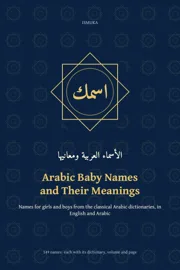 The book: Arabic Baby Names and Their Meanings149 names, each with its dictionary, volume and page · PDF $6.99 →Or the paperback on Amazon, $9.99 →
Questions about these names
Where do these meanings come from?
Each meaning is quoted from a named source, mostly the classical Arabic dictionaries: Lisan al-Arab, al-Sihah, Maqayis al-Lugha, al-Qamus al-Muhit and Taj al-Arus. Each name’s page gives the book, volume and page.
We never write “personality traits” of a name, luck or numerology: the dictionaries say nothing of the kind. We give the meaning as the book gives it, and name the book, volume and page.