اسمكIsmuka

عُثْمان

Usman

عثم

Usman Name Meaning

al-Qamus al-Muhit: al-uthman is the chick of the bustard, and the young of the snake.

Root
عثم
Name
Girls and boys
Also written
Uthman · Osman · Othman · عثمان

The story of the name, from the sources

  1. Usman, or Uthman, comes from the root ayn-tha-mim. Al-Qamus al-Muhit says: al-uthman is the chick of the bustard, and the young of the snake. And al-Zabidi writes in Taj al-Arus: Uthman is a man's name, named after one of these.

    “the bustard’s chick”

    “al-⁠uthman: the chick of the bustard, and the young of the snake”

    “Uthman: a man’s name, named after one of these” · al-⁠Zabidi

    al-⁠Qamus al-⁠Muhit · vol. 1, p. 1135 · Taj al-⁠Arus · vol. 33, pp. 53⁠–⁠58

  2. From the same root comes athama: to set a broken bone. Ibn Durayd says Uthman is built from al-athm. And Ibn Faris quotes al-Khalil: from this Uthman was named, because it is taken from setting bones.

    setting a broken bone

    “from this Uthman was named, because it is taken from al-⁠jabr” · al-⁠Khalil

    “Uthman: fu‘lan, from al-⁠athm” · Ibn Durayd

    Maqayis al-⁠Lugha · vol. 4, p. 229 · al-⁠Ishtiqaq · vol. 1, p. 50 · Lisan al-⁠Arab · vol. 12, pp. 383⁠–⁠385

  3. Its most famous bearer is Uthman ibn Affan, the Commander of the Faithful, may God be pleased with him. The Prophet, peace be upon him, married him to his daughter Ruqayya, and when she died, to her sister Umm Kulthum, so he was called Dhu al-Nurayn, the one with two lights, as Ibn Hajar writes.

    Dhu al-⁠Nurayn

    Uthman ibn Affan, may God be pleased with him

    “then he married him to her sister Umm Kulthum, and so he was called Dhu al-⁠Nurayn”

    Ibn Hajar

    al-⁠Isaba · vol. 4, p. 377

  4. In Sahih Muslim, Aisha tells how Abu Bakr, then Umar, came in while the Prophet, peace be upon him, lay at ease, and he stayed as he was; when Uthman asked to come in, he sat up and arranged his clothes, and said: Shall I not feel shy before a man the angels feel shy before?

    “Shall I not feel shy before a man the angels feel shy before?”

    the Prophet ﷺ, of Uthman

    he sat up and arranged his clothes when Uthman asked to come in · Aisha

    Sahih Muslim 2401

  5. In al-Jahiz's Book of Animals, the bustard guards its eggs or its chicks most fiercely, so that Uthman ibn Affan, may God be pleased with him, said: Everything loves its young, even the bustard.

    “Everything loves its young, even the bustard”

    Uthman ibn Affan

    “it guards its eggs or its chicks most fiercely” · al-⁠Jahiz

    al-⁠Jahiz, al-⁠Hayawan · vol. 5, p. 84 · vol. 7, p. 22
In short

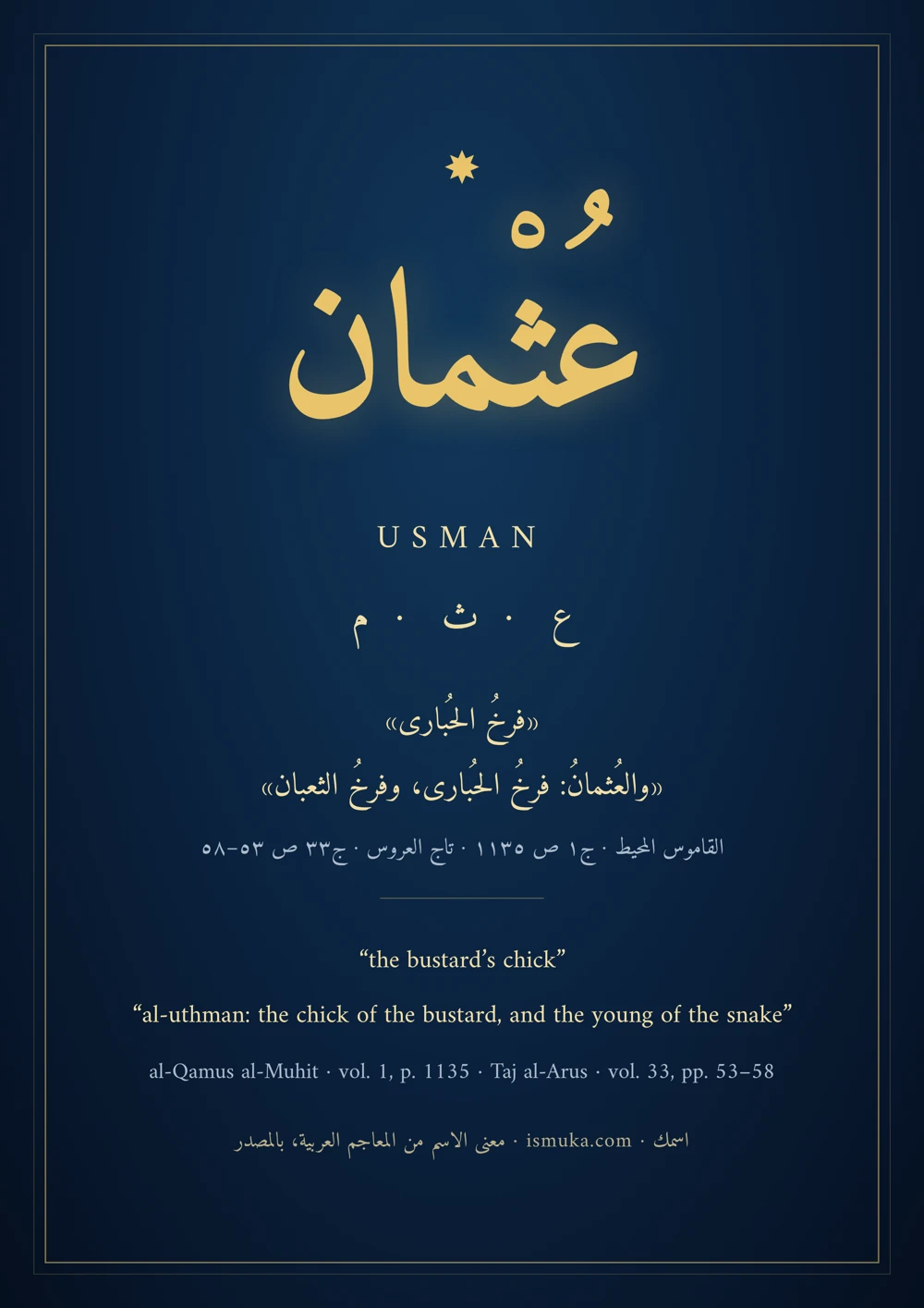
عُثْمان

the bustard’s chick, a bone set after it broke, and the name of Dhu al-⁠Nurayn

The sourced keepsake of the name Usman

Give Usman the story of their name

Made for one person and sent privately: never posted on our channels.

  • A personal page that opens like a sealed letter, “For Usman, from you”: the name writes itself in gold, then its story, from the dictionaries, one tap at a time, and your own message.
  • A short vertical video of the same, ready for WhatsApp and stories.
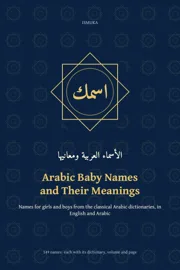
  • The sourced keepsake to print: Usman in calligraphy, its root, and the dictionary line with its book, volume and page.
Gift this name →Download your free name card

Questions about the name Usman

What does the name Usman mean?

Al-Qamus al-Muhit: al-uthman is the chick of the bustard, and the young of the snake; al-Zabidi, Taj al-Arus: Uthman is a man's name, named after one of these; Maqayis al-Lugha, from al-Khalil: from al-jabr, setting a broken bone. In the film: Dhu al-Nurayn, Uthman ibn Affan, may God be pleased with him (al-Isaba), "Shall I not feel shy before a man the angels feel shy before?" (Sahih Muslim 2401), and his own saying "Everything loves its young, even the bustard" (al-Jahiz, al-Hayawan).

How do you write Usman in Arabic?

Usman is written عثمان in Arabic; also spelled Uthman, Osman, Othman.

What is the root of the name Usman?

In the Arabic dictionaries, Usman goes back to the root ع · ث · م.

How we researched it

14 books searched · 14 passages read

  • al-Qamus al-Muhit
  • Taj al-Arus
  • Maqayis al-Lugha
  • al-Ishtiqaq
  • al-Isaba
  • Sahih Muslim · al-Hayawan

References, by volume and page

  • al-⁠Qamus al-⁠Muhit · vol. 1, p. 1135 · Taj al-⁠Arus · vol. 33, pp. 53⁠–⁠58
  • Maqayis al-⁠Lugha · vol. 4, p. 229 · al-⁠Ishtiqaq · vol. 1, p. 50 · Lisan al-⁠Arab · vol. 12, pp. 383⁠–⁠385
  • al-⁠Isaba · vol. 4, p. 377
  • Sahih Muslim 2401
  • al-⁠Jahiz, al-⁠Hayawan · vol. 5, p. 84 · vol. 7, p. 22
We never write “personality traits” of a name, luck or numerology: the dictionaries say nothing of the kind. We give the meaning as the book gives it, and name the book, volume and page.