The story of the name, from the sources

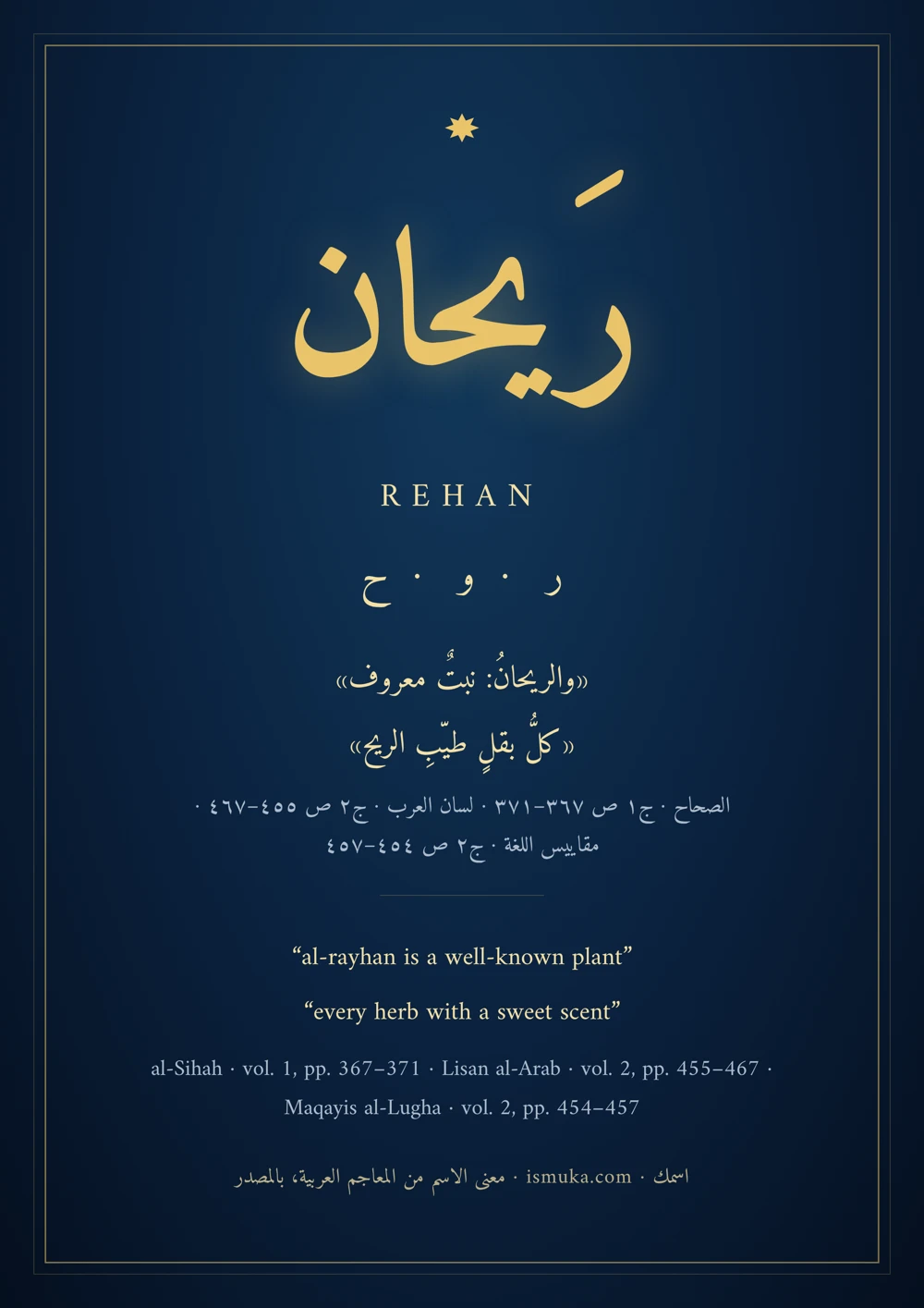
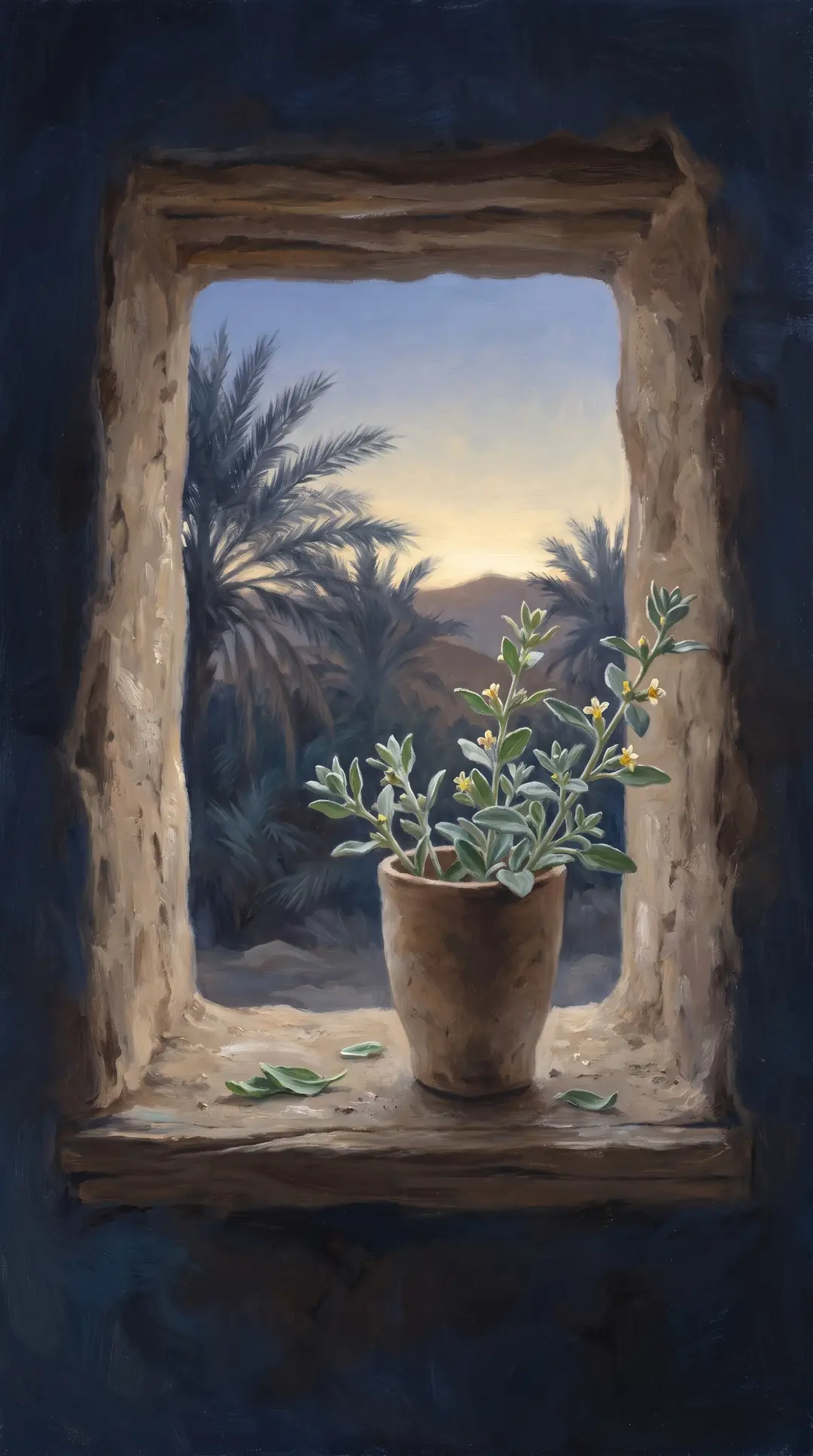
Rehan, also written Rayhan, comes from the root ra-waw-ha. Al-Sihah says: al-rayhan is a well-known plant. Lisan al-Arab: every herb with a sweet scent; one sprig is a rayhana. And Ibn Faris says of this root: the origin of it all is the wind.
“al-rayhan is a well-known plant”
“every herb with a sweet scent”
Ibn Faris: “the origin of it all is the wind”
al-Sihah · vol. 1, pp. 367–371 · Lisan al-Arab · vol. 2, pp. 455–467 · Maqayis al-Lugha · vol. 2, pp. 454–457

Rayhan is also provision; you say: I went out seeking God's rayhan. In Surah al-Rahman: and grain with its husks, and rayhan. Sahih al-Bukhari explains: in the speech of the Arabs, rayhan is provision.
“al-rayhan is provision”
﴿وَالْحَبُّ ذُو الْعَصْفِ وَالرَّيْحَانُ﴾
Surah al-Rahman 55:12 “and grain with its husks, and rayhan”
al-Bukhari: “in the speech of the Arabs, rayhan is provision”
al-Sihah · vol. 1, pp. 367–371 · Verse text: Tanzil · Sahih al-Bukhari · vol. 6, p. 144

In Surah al-Waqia, of those brought near: rawh and rayhan, and a garden of bliss. Lisan al-Arab says: that is, mercy and provision.
﴿فَرَوْحٌ وَرَيْحَانٌ وَجَنَّتُ نَعِيمٍ﴾
Surah al-Waqia 56:89 · “rawh and rayhan, and a garden of bliss”
Lisan al-Arab: “that is, mercy and provision”
Verse text: Tanzil · Lisan al-Arab · vol. 2, pp. 455–467
Taj al-Arus adds, as a figure of speech: rayhan is a child. And Lisan al-Arab says: from provision, a child is called rayhan. In Sahih al-Bukhari, in the chapter on al-Hasan and al-Husayn, the Prophet, peace be upon him, says: they are my two rayhanas of this world.
“rayhan: a child”
“from provision, a child is called rayhan”
“They are my two rayhanas of this world”
the Prophet ﷺ, of al-Hasan and al-Husayn
Taj al-Arus · vol. 6, pp. 407–438 · Lisan al-Arab · vol. 2, pp. 455–467 · Sahih al-Bukhari 3753 · 5994
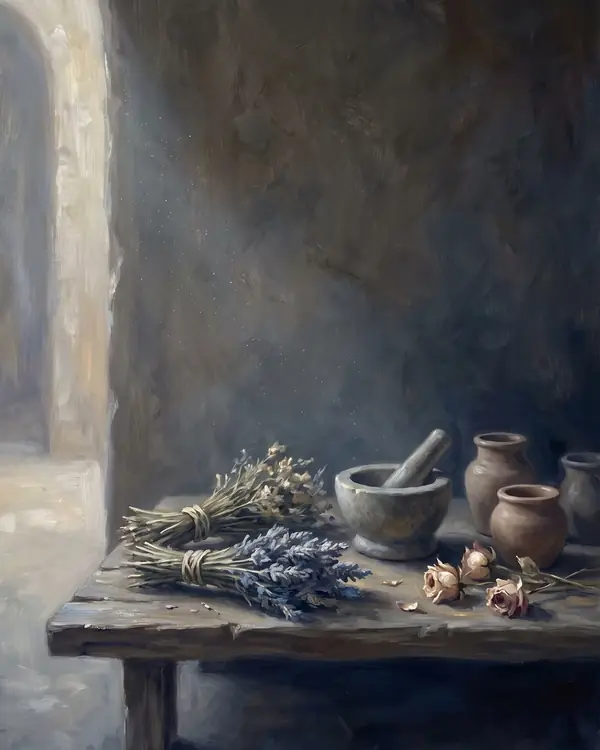
In Sahih Muslim, the Prophet, peace be upon him, said: whoever is offered rayhan, let him not refuse it, for it is light to carry and sweet in scent.
“Whoever is offered rayhan, let him not refuse it: it is light to carry, and sweet in scent”
the Prophet ﷺ
the chapter on not refusing rayhan and perfume
Sahih Muslim 2253

Among its bearers is Rayhan ibn Sa'id of Basra, Abu Isma. Ibn Sa'd lists him in al-Tabaqat and says he died in Basra in the year 203 or 204, and Ibn Abi Shayba narrated from him. Taj al-Arus also names Rayhan ibn Yazid al-Amiri.
Rayhan ibn Sa’id
Abu Isma, of Basra, who died there in 203 or 204 AH
Ibn Abi Shayba narrated from him
and Rayhan ibn Yazid al-Amiri
Ibn Sa’d, al-Tabaqat · vol. 7, p. 219 · al-Isaba · vol. 7, p. 269 · Taj al-Arus · vol. 6, pp. 407–438