The story of the name, from the sources

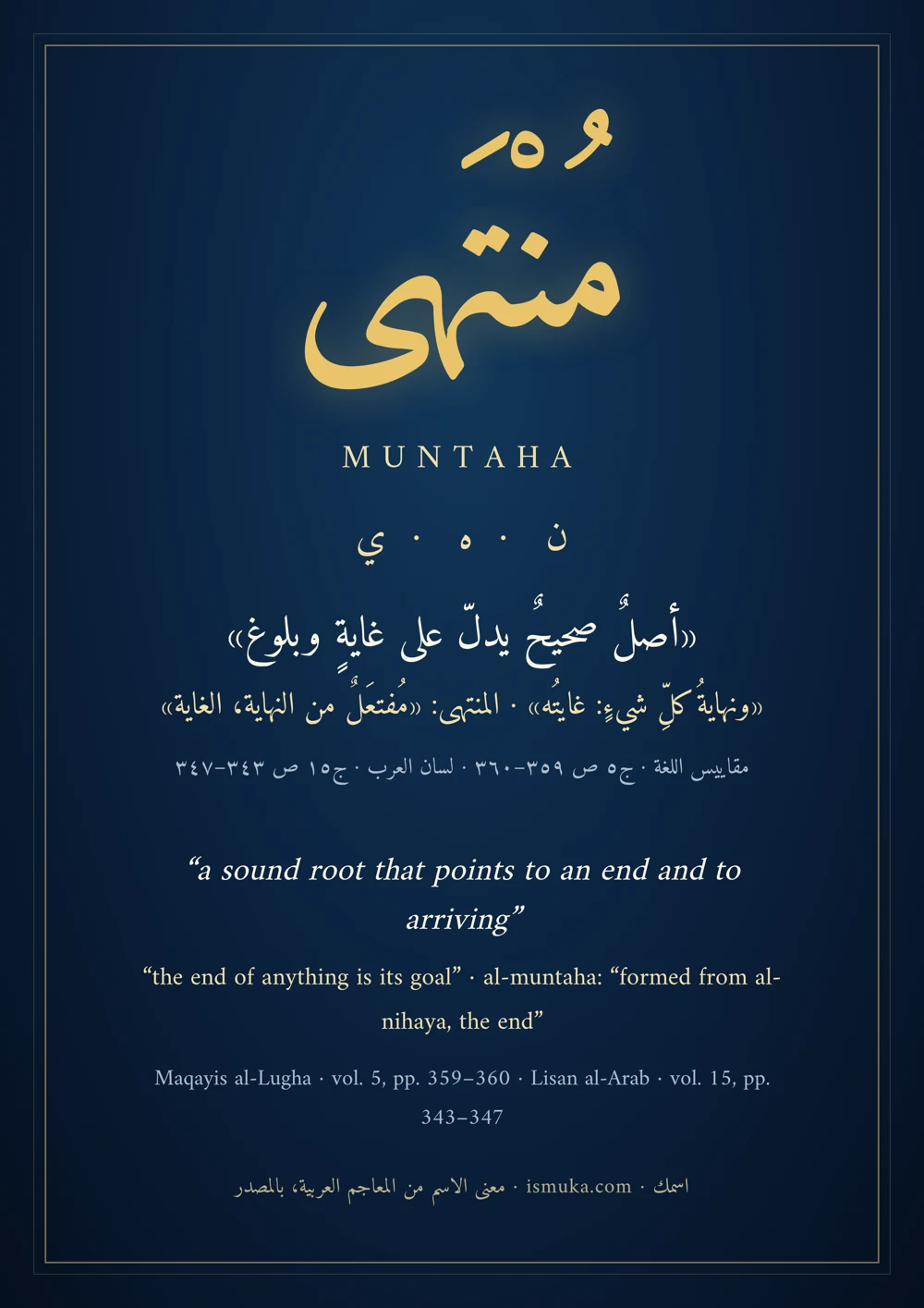
Muntaha comes from the root nun-ha-ya. Ibn Faris writes in Maqayis al-Lugha: a sound root that points to an end and to arriving; the end of anything is its goal. Lisan al-Arab says: al-muntaha is formed from al-nihaya, the end, the goal.
“a sound root that points to an end and to arriving”
“the end of anything is its goal” · al-muntaha: “formed from al-nihaya, the end”
Maqayis al-Lugha · vol. 5, pp. 359–360 · Lisan al-Arab · vol. 15, pp. 343–347
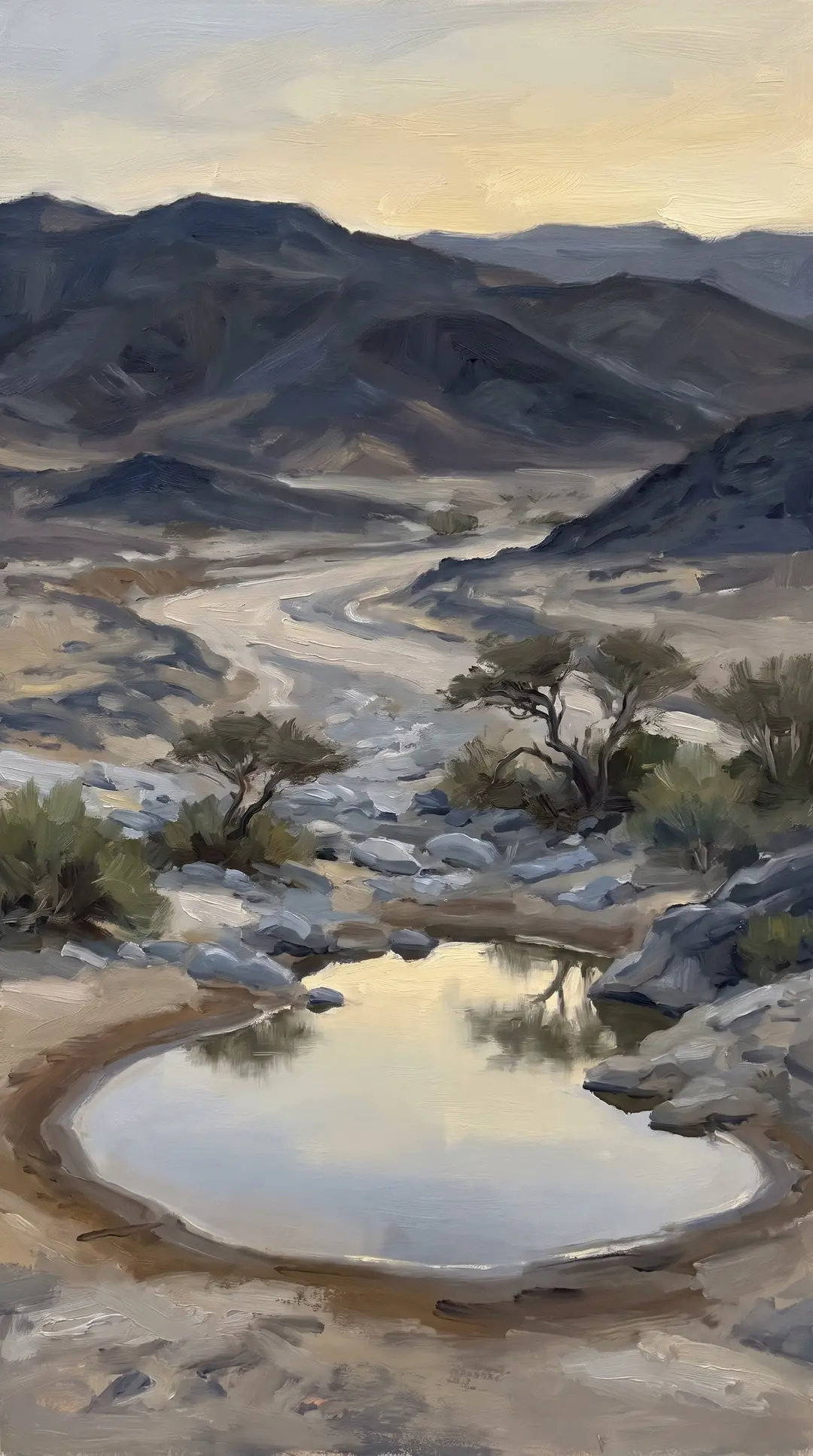
The same root gives words for water. Al-nihy is a pool, Ibn Faris says, because water ends in it. The tanhiya of a valley is where its floods end. Al-Sihah says: the water tanaha, it stood still in the pool and settled.
al-nihy: a pool
“because the water comes to an end in it”
“the water tanaha: it stood still in the pool and settled”
Maqayis al-Lugha · vol. 5, pp. 359–360 · al-Sihah · vol. 6, pp. 2517–2518

The word is in the Quran twice, in Surah An-Najm: at the lote tree of al-Muntaha, 53:14; and that to your Lord is the final end, 53:42.
﴿عِندَ سِدْرَةِ الْمُنتَهَىٰ﴾
Surah An-Najm 53:14 · the lote tree of al-Muntaha
﴿وَأَنَّ إِلَىٰ رَبِّكَ الْمُنتَهَىٰ﴾
Surah An-Najm 53:42 · and that to your Lord is the final end
Verse text: Tanzil

What does al-muntaha mean in the tree's name? Lisan al-Arab says: it is reached, one arrives at it, and it is not passed. In Sahih Muslim, Abdullah ibn Mas'ud, may God be pleased with him, says: to it comes what is taken up from the earth, and is taken from there; and to it comes what is brought down from above it, and is taken from there.
“it is reached, one arrives at it, and it is not passed” · Lisan al-Arab
“to it comes what is taken up from the earth, and is taken from there; to it comes what is brought down from above it, and is taken from there”
Abdullah ibn Mas’ud
Lisan al-Arab · vol. 15, pp. 343–347 · Sahih Muslim 173
The Arabs also said, from the same root: this is a woman who is nahiyatuk, enough for you. Al-Sihah explains: by earnestness and worth, such a person stops you looking for anyone else. We found no woman named Muntaha in our books of the first centuries: the name is the word itself.
“this is a woman who is nahiyatuk: enough for you”
“by earnestness and worth, such a one stops you looking for anyone else”
we found no woman named Muntaha in our books of the first centuries
al-Sihah · vol. 6, pp. 2517–2518